
The Modular Housing Debate
An examination of modular construction as an evolving response to rising costs and housing shortages

Modular Housing in Context
Rising construction costs have become one of the most persistent challenges in delivering new housing. Labor shortages, volatile material prices, tariffs, and the inefficiencies of site-built methods all add layers of expense that make it harder to produce homes at affordable levels. Against this backdrop, modular housing has re-emerged as a construction method worth renewed attention.
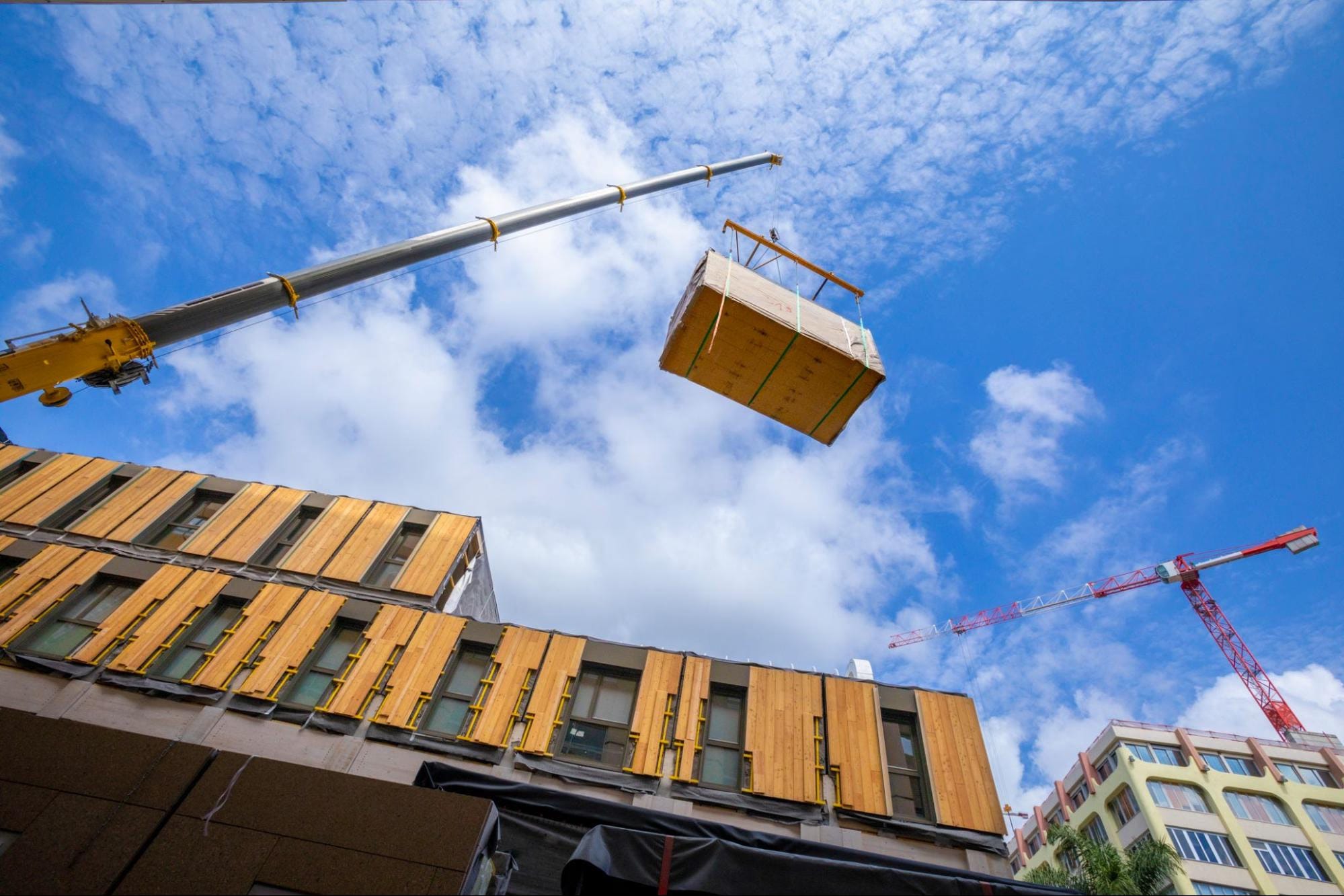
At its core, modular housing shifts much of the building process away from the job site and into a factory. Modules ranging from wall panels to fully finished rooms are fabricated in controlled environments, then transported and assembled on-site. This approach doesn’t eliminate traditional construction, but it reorders it, aiming to address some of the cost and scheduling pressures that drive overall housing prices upward.
While not new factory-built homes have appeared in various forms for more than a century today’s modular methods reflect advances in design, manufacturing, and logistics. These updates make it possible to consider modular construction not just as a niche alternative, but as one of several emerging tools with potential relevance to the broader conversation on affordability.
What is Modular Housing?
Modular housing refers to homes built in sections or modules within a factory before being transported and assembled on a permanent foundation at the construction site. Unlike manufactured homes, which are built on a permanent chassis and regulated under federal HUD codes, modular homes must comply with the same state and local building codes as traditional site-built housing. This distinction matters: modular homes are treated as real property, indistinguishable in regulation and long-term value from conventionally built homes.
The process itself is where modular begins to diverge from standard construction. By shifting much of the work into a factory environment, modular methods introduce efficiencies that can directly influence affordability. Materials are purchased in bulk and stored securely, reducing waste and theft two factors that contribute to cost overruns on job sites. Labor is more predictable, as crews work indoors year-round, insulated from weather delays. Modules are fabricated alongside one another in an assembly-line sequence, shortening build times by as much as 20 to 50 percent compared with stick-built methods.
These efficiencies have downstream effects on affordability. Shorter timelines reduce carrying costs for developers, including interest on construction loans and holding costs for land. Lower labor requirements help offset the rising wages associated with skilled construction work. In aggregate, these savings can lower the total development cost, creating more space in project budgets to serve affordable or workforce housing goals. For buyers and renters, this can translate into price points that are more attainable one survey found nearly 20 percent of modular homes sold for under $300,000, compared with 14 percent of stick-built homes.
At the same time, modular housing does not necessarily guarantee affordability. Factories themselves require significant upfront investment, and scaling production across markets is uneven. Still, as an approach to construction, modular offers an intriguing way of rethinking how homes are delivered one that directly engages with the structural cost drivers that continue to push housing out of reach for many households.
Why Modular Housing Matters for Affordability
One of the central questions around modular housing is whether its process translates into lower housing costs. While results vary across markets and project types, several trends suggest that modular construction can relieve pressure on three cost drivers that escalate housing prices: time, labor, and financing.
Time Savings
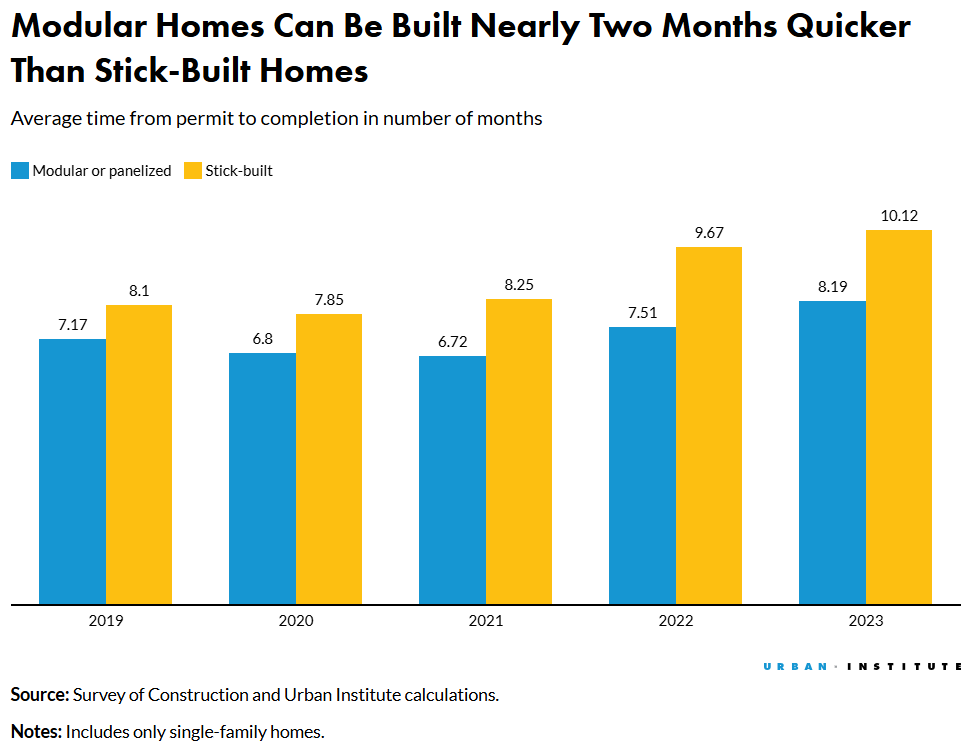
The most immediate advantage of modular is speed. Building in a factory allows site preparation and module fabrication to occur simultaneously. According to McKinsey, modular can accelerate end-to-end project timelines by 20 to 50 percent. The Urban Institute’s analysis of 2023 construction data reinforces this: a modular single-family home averaged just over eight months from permit to completion nearly two months faster than a stick-built home.
Labor Efficiency
Labor shortages have been a defining feature of the construction industry. Factories mitigate this by centralizing workforces and reducing reliance on scarce skilled trades. McKinsey estimates modular methods can cut overall labor needs and reduce costs by up to 20 percent. Similarly, modular facilities often operate year-round, avoiding weather-related downtime that strains labor budgets.
Financing and Affordability Outcomes
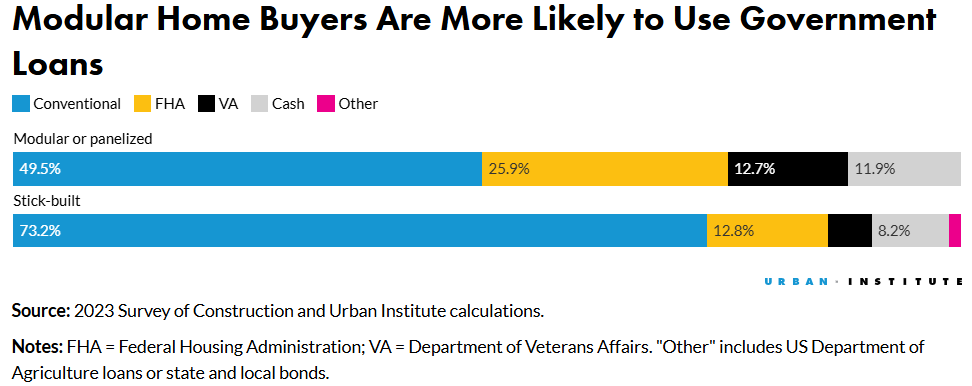
The cost advantages show up not just in project budgets but also in who buys modular homes. Modular homebuyers are disproportionately lower-income and more reliant on government-backed mortgages. FHA and VA loans financed 38.6 percent of modular homes in 2023, compared with just 17.5 percent of stick-built homes. This indicates that modular is reaching a segment of the market more likely to face affordability constraints.
Limitations and Variability
It’s important to note that modular is not a guaranteed affordability solution. Savings depend heavily on project scale, supply chain stability, and regional acceptance. Factories are capital intensive, and without steady demand, production benefits can erode. In addition, modular homes’ affordability edge has narrowed in some markets as overall construction costs have risen. For example, while nearly 20 percent of modular homes sold for under $300,000 in 2023, that share has declined over time, paralleling trends in stick-built homes.
In sum, modular housing offers tangible affordability benefits rooted in faster timelines, lower labor needs, and financing access for lower-income buyers. Yet those benefits are not automatic. The data suggests modular can create a meaningful affordability edge but only if scaled and integrated into broader housing strategies.
Challenges Facing Modular Housing
While modular construction offers notable advantages, its adoption has been uneven in the United States. A closer look reveals several barriers perceptions, financing, regulations, and industry dynamics that limit modular’s ability to scale and fully deliver on affordability potential.
Perception and Market Acceptance
Despite advances in technology and design, modular housing still carries the stigma of “prefab.” For decades, prefabricated housing was associated with lower-quality mobile homes, shaping public skepticism and investor caution. Even when modular units are indistinguishable from site-built housing, community pushback or lack of familiarity can slow approvals and reduce demand. For developers, this perception gap can complicate efforts to market modular as a reliable and lasting housing product.
Financing and Capital Intensity
Building and operating a modular factory is capital intensive. Companies must invest in facilities and equipment before projects are in hand, creating significant financial risk. When pipelines dry up, as seen with U.S. firm Katerra’s bankruptcy in 2021 and several high-profile U.K. modular company closures, the economics collapse.
On the financing side, lenders often apply conventional construction loan models that don’t fit modular’s cash flow needs. Because so much of the cost is front-loaded in the factory phase, modular builders require large early draws sometimes ahead of work being placed on site, while banks are accustomed to releasing funds as work is completed on-site. Additionally, large early draws increase construction interest over the duration of the project. This mismatch can create liquidity problems, especially for affordable housing developers who already navigate complex subsidy layers.
Regulatory Barriers
Unlike manufactured housing, which follows a single federal HUD code, modular homes must comply with state and local codes where they are sited. This patchwork means a factory may need to customize production for each jurisdiction, eroding the economies of scale that underpin cost savings. In some states, approval processes are inconsistent, requiring bespoke reviews that add time and cost. Compared with countries like Sweden and Japan where modular accounts for 15–45 percent of new housing the lack of regulatory uniformity in the U.S. has slowed adoption.
Industry Struggles and Scale
Modular remains a small share of the U.S. housing market. Less than 4 percent of homes today are built using modular methods, compared with 45 percent in Nordic countries. Even within multifamily housing, where modular has gained traction, it accounted for only 7 percent of completions in 2023.
These challenges perception, financing, regulation, and scale help explain why modular housing has not yet achieved widespread adoption in the U.S. They also highlight why modular, while promising, cannot be viewed as a standalone solution to affordability. Addressing these barriers will determine whether modular remains a niche method or evolves into a central tool in delivering affordable homes at scale.
Sustainability and Social Impact
Beyond speed and cost, modular housing carries implications for sustainability and community outcomes factors increasingly tied to how affordability is understood and financed.
Environmental Benefits
Because modules are built in factory settings, material use is more controlled, and waste is significantly reduced. Some modular manufacturers report sending “zero waste to landfill” over multiple years of production. A study from Cambridge and Edinburgh Napier Universities found that modular construction can cut embodied carbon the emissions generated during construction by up to 45 percent. Fewer deliveries to job sites also reduce emissions and traffic; one U.K. industry report estimated 80 percent fewer vehicle trips for modular projects compared with traditional builds. These efficiencies align with growing policy emphasis on sustainable building, especially in affordable housing programs that pair cost savings with climate goals.
Energy Efficiency and Resident Benefits
Factory-built precision often translates into tighter building envelopes and more consistent quality control, producing homes that are more energy efficient. For residents, especially those in affordable housing, lower utility bills can be as impactful as lower rents. Energy-efficient modular homes not only reduce operating costs but also increase long-term housing stability for households balancing rent, utilities, and other living expenses.
Workforce and Equity Considerations
Modular construction also reconfigures how and where construction work happens. By moving jobs into factories, modular can create more predictable employment environments, with year-round schedules and safer working conditions compared with job sites. Advocates argue this shift has potential to diversify the construction workforce, opening opportunities to groups historically underrepresented in the building trades. If paired with workforce development initiatives, modular housing could expand not only the supply of homes but also access to good-paying jobs.
Community Impact
Finally, modular’s potential for faster delivery and lower development costs could support broader community goals. Whether through rapid disaster recovery housing as seen in FEMA’s use of modular units in Hawaii or through easing pressure in tight rental markets, modular offers municipalities an option to respond more quickly to housing needs. By reducing both environmental and financial burdens, modular construction may help align affordability with resilience, ensuring that affordable housing contributes to long-term community health and stability.
Modular’s Potential Future
Modular housing is not new, but its role in today’s housing conversation feels different. Rising costs, labor shortages, and environmental pressures have created conditions where the efficiencies of factory-built methods are harder to ignore. For affordable housing specifically, modular offers potential advantages faster delivery, reduced construction costs, and more sustainable building practices that directly engage with the drivers of high housing prices.
At the same time, the challenges are real. Factories require significant upfront investment, regulatory fragmentation slows adoption, and the U.S. market has yet to scale modular construction beyond a niche share of total housing. These limitations help explain why modular has been framed as a promising alternative for decades without becoming a dominant approach.
Still, the current moment offers reasons to watch modular closely. It is gaining footholds in multifamily development, in disaster recovery, and in communities where affordability gaps are most acute. Whether it becomes a central part of housing production will depend less on its technical promise and more on how financing, policy, and industry practices adapt to support it.
For now, modular housing should be understood as an emerging tool: one that doesn’t replace traditional construction, but that may complement it in ways that make affordable housing more achievable. Its future lies not in whether it can solve the affordability crisis on its own, but in how it can fit within the broader strategies we use to expand housing supply.
About the Author
Charles Sims is an affordable housing developer and community builder with over 17 years of experience leading real estate projects that prioritize people, equity, and long-term impact. He has helped shape award-winning multifamily communities across the Mid-Atlantic and South Florida. Charles is passionate about creating housing that not only provides shelter but supports dignity, stability, and connection.